


By default, we live in the now. We react — meeting each moment as it comes, doing what the situation in front of us seems to demand. It's how we survive, and most of the time it runs on its own.
Harder, and more worth it, is thinking across larger scales of time and space: stepping out of the reaction, forming a plan for what we actually want, and acting in service of purposes deeper than the urges of any single now. That shift — from reacting to authoring — is the subject of this blog.
Here we work out the fundamentals, one piece at a time: how we pay attention, decide, build things, and work alongside other people. The thinking grounds the mentoring in steamHouse's Goatrunner team, but none of it is really about robotics — it's about how any person, and any team, moves from autopilot to authorship.

Keeping Score on the Wrong Board
By every measure anyone hands you, your kid is fine, and something still sits wrong. Eight Fridays, one argument: the environment is doing the teaching, and one of those environments is yours.

What Does It Mean When Strangers Keep Agreeing?
Everything I've written this summer comes from one small organization in Golden, Colorado. So why believe it? Because the same short list keeps turning up independently — in cognitive science and classroom research, in Aristotle and Aquinas and the Mussar tradition — among people who never met. Strangers agreeing is worth more than allies agreeing.

Connection before correction
As a young teacher, an off-task kid could pull an outsized reaction out of me — and my overreaction produced one in the kid. What the moment actually needed was less, delivered closer: walk nearby, a touch, a whisper. Connection before correction isn't softness. It's precision, and the home is where it matters most.

What Fills the Space Where the Phone Was?
The national numbers on school phone bans came in, and the honest summary is that almost nothing happened. That turns out to be the most useful finding available, if you read what the researchers said it depends on.
What Has to Exist Before a Goal Can Be Real?
Why the vision maps go blank by week four, what a real goal actually requires before anyone can set one, and why our own marker map — built from the research, one placement at a time — puts purpose in the middle of a childhood and living by it dead last.
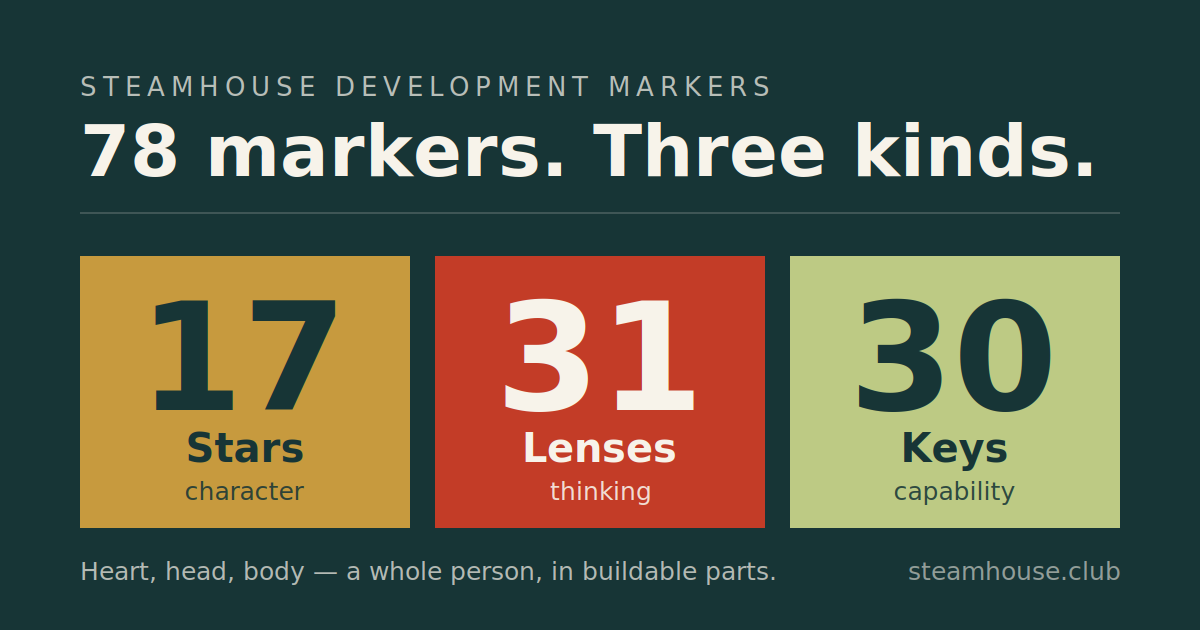
The Markers, Plainly Told
Seventy-eight markers in three kinds: character, thinking, capability. Four principles underneath them, three developmental stages across a childhood, and a four-rung ladder that separates the kid who can explain a capacity from the kid who quietly lives it. Fourteen seasons of coaching robotics, as evidence.

Your Brain Has Shortcuts, and They’re Being Hacked
Why do rare things feel common and common things feel rare? A ten-second experiment shows the mental shortcut at work — and what's hacking it now.
Your sense of what's common in the world runs on a mental shortcut that served humans well for most of history. It still runs faithfully — but what's being fed into it has changed. A ten-second experiment shows you the shortcut at work.

Two Kinds of Doing Fine
Is your kid actually doing fine — or just performing fine? A teacher's confession about the two kinds, and which one the conference table was built to discuss.
Grades good, nobody calling home — one kind of fine. Something growing on the inside — the other kind. A teacher's confession about which one the conference table was built to discuss, and what robotics kids taught me about the difference.
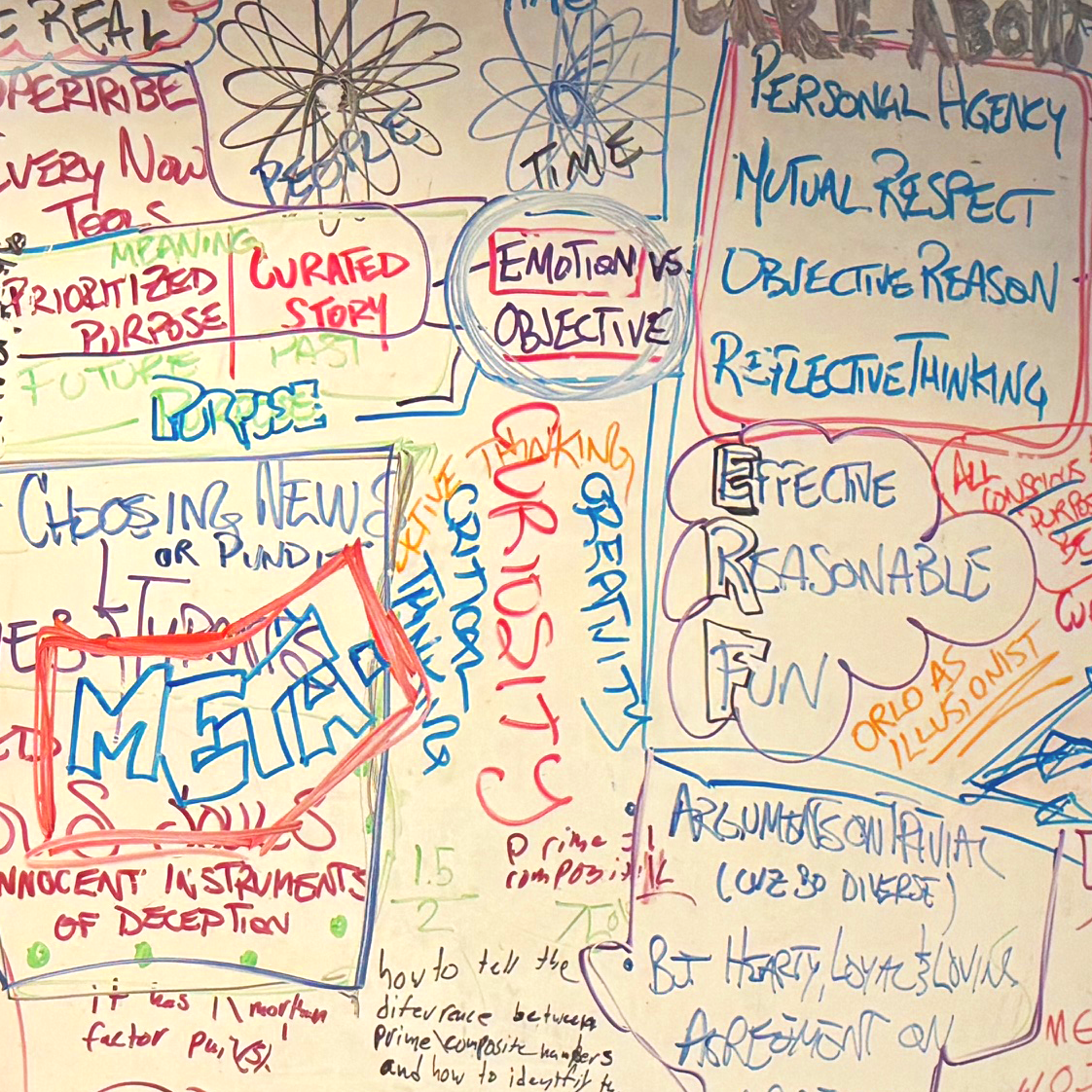
The Long Answer
What is steamHouse, really? The founder's long answer to ten years of the question — why the thing was never a thing, and how the short answer arrived.
For ten years, people asked me what I was building, and I never had an answer that fit in a doorway. This is the explanation I owed them — why the thing was never a thing, and how the short answer finally arrived.