


You make meaning through story. Not as a metaphor — as cognitive architecture. Memory leans on episode more than on data. Identity is the story you tell about yourself. Decision is projection: you choose by imagining how a sequence unfolds. Connection is shared narrative. Much of your equipment for being a person runs on it.
Chronicles is the part of steamHouse that takes that equipment seriously — and makes the full case for why.


There should be one place in the world — vivid in fiction, if nowhere else — where people come together under a few principles they've chosen, not divided by animal reaction or inherited difference.
Most of steamHouse is the slow work of building toward that place for real. Chronicles is the part that moves you: where the thing we're building toward gets to exist now, at full color, because that's what story is for. A story can show you a world that doesn't exist yet and let you live there long enough to want it.
So Chronicles begins with three creatures who ought to be enemies — a human, an octopus, a dragon — who discover they revere the same few things and choose each other on that basis. Not a fable about getting along. It's a model of belonging built for difference: share a little, hold it close, let the rest go.


Chronicles is the part of steamHouse most actively under construction. The architectural work — the frameworks, the markers, the storyworld design — is in place. The engineered storytelling on top of it is being built now. We put this page up at this stage because the architecture is itself worth engaging with, and because openly-under-construction is the project's posture. What you see below is the architecture; what comes next is the storytelling.

The two pulls
Every story is doing two things at once — moving you and informing you — and both are forms of pull. The proportions vary. A novel leans hard toward the first; a court transcript leans hard toward the second; most of what you actually encounter sits somewhere in between, doing some of each.
The two pulls are real, though, and worth naming. The compelling pull aims to move — its discipline is dramatic — it works on what you feel, the pull of what happens next. The objective pull aims to inform — its discipline is evidentiary, what is true, what can be held up to inspection. Most public confusion about story comes from not seeing that any given telling is doing both, and from not noticing the ratio.
When the compelling pull dominates without much objective ballast, the result drifts toward propaganda — and a person who cannot tell the difference is vulnerable to whoever tells the most compelling lies. When the objective pull dominates without much dramatic shape, the result gets ignored — and the truths it carries die in silence.
The skill — and what Chronicles teaches by enacting — is reading both pulls at once. Watching a story land and asking: is it true? am I noticing the proportion of what's moving me and what's informing me? That is one of the most important literacies a person can develop in the present media environment, and it is genuinely teachable.

"Sesame Street took early literacy. Bill Nye took elementary science. Mr. Rogers took the inner life of small children. Hamilton took the founding era."
The lineage that produced these — formation through engineered narrative on a foundation of rigorous research — has gone largely quiet for two decades. The territory steamHouse cares about most — the formation work of adolescence and young adulthood, how to think, how to live with others across difference, how to author one's own life — has no current occupant in it.
Chronicles is steamHouse's bid to do the work the lineage points at, for that audience and this decade. Story engineered carefully on top of the same architecture Commons teaches, designed so that the dramatically interesting choices and the developmentally important choices are the same choices. That is the discipline. The result, at its best, would be a body of work that earns its keep among the work that taught generations how to read, how to know, how to feel.

You make meaning through story. Not as a metaphor — as cognitive architecture.


The story world
The world Chronicles is built in began as a thought experiment: what if three species who should have been natural enemies — hominids, an octopus-like marine intelligence, a dragonoid air-and-cliff species — discovered that they could cooperate around a small set of shared principles, and built a civilization on that discovery?
They did. The civilization is the TeraTerraTribe, and its operating premise is effective, reasonable, fun — their test for what's worth keeping. Over many generations the TeraTerraTribe developed practices, traditions, and ways of being together that look, from a distance, like what people across our own traditions have always meant by wisdom.
That civilization is now in trouble. Curiosity is declining on a parallel Earth — our Earth — in ways that, in the story's cosmology, threaten the conditions for conscious civilization everywhere. A small team is dispatched across the chronospatial gap to make contact. Their problem is the one Chronicles itself is built around: logic alone does not land. Argument alone does not move people. What is needed is story.
That intervention — and what it sets in motion in our world — is the spine of the story Chronicles is telling, in installments, in different forms, across the next several years. Trek-Quest sits inside this world. The Field Notes from a Fictional Journalist series begins inside it.
Story in practice
A test that becomes a people
Long before the present action, three species of intelligent life discover that they can cooperate if they hold to a single shared question: a way of doing things is worth keeping only if it is effective, reasonable, and fun. Over many generations the question becomes their identity — not professed, but lived. On our Earth — and on a parallel one — the people who carry the same test forward call themselves Earth ERFers. The fiction shows what it looks like when a principle is who you are, not a rule you follow.
A supertribe in conversation with itself
Inside the Earth ERFers, two factions hold the same ERF commitment in different registers. One leads with the larger picture — ideals, possibility, the outward "us." The other leads with the immediate picture — evidence, essentials, the inward check. Two registers of full consciousness inside one shared foundation. The argument between them is sometimes hard; neither faction wants to be the other; both keep needing what the other holds. The fiction dramatizes what disagreement inside shared commitment looks like — which is what conscious civilization actually requires.
A worked example of the framework
The TeraTerraTribe is what generations of the ERF test, lived out in civic practice, accumulate into: traditions, course-corrections, ways of being together. Commons can describe what such a civilization would require. Chronicles shows what it would feel like to live in one — what it costs, what it makes possible, and what stays hard inside it.
We understand through story before we understand through explanation.
We care through story before we care through argument.
We become through story before we become through instruction.
Where it stands honestly
The architecture came first on purpose — the frameworks had to be sound before stories built on them would be worth anything. That work — the 78 development markers, the four principles, the three capacities — is in place. The architecture is what Chronicles is engineered against.
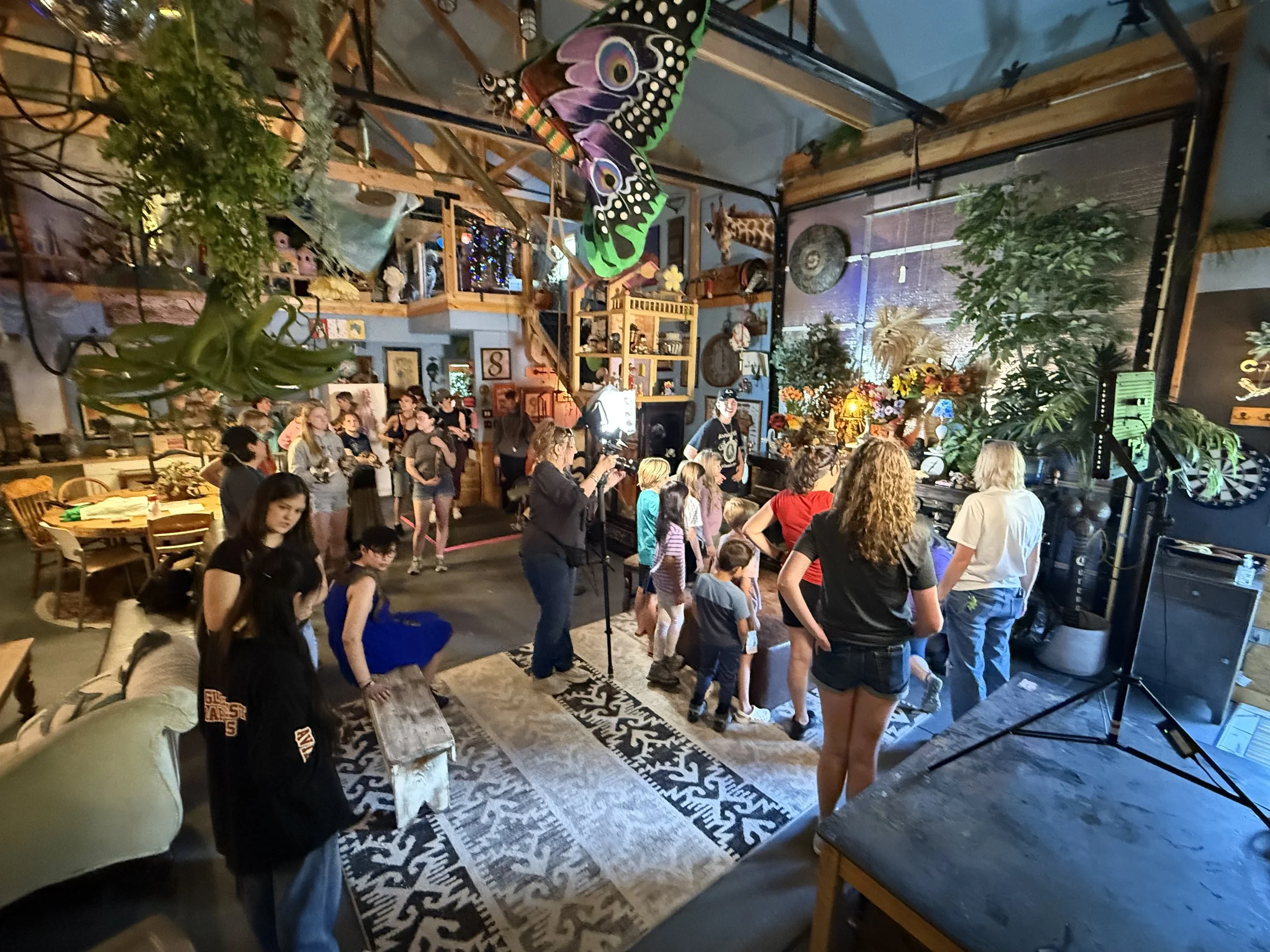
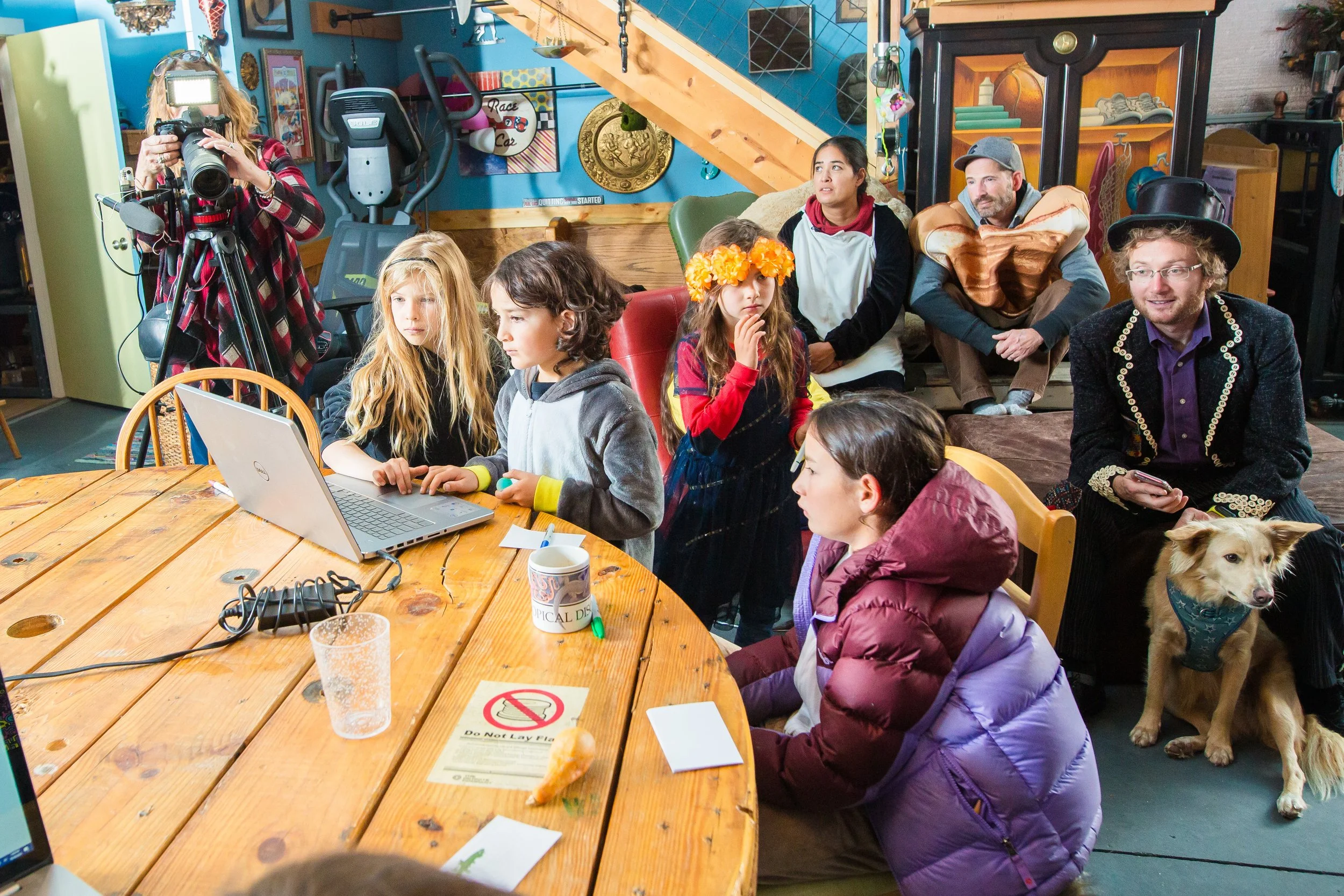
A Story Team — with writers, storytellers, and a videography team in place — is now developing the storyscape into the forms it will actually meet readers in. The work-in-progress includes a video archive from eight years of Club events, a 137,000-word story bible, four treatment lengths, character journey maps, episode plans, and a production script for a 60-minute pilot.
Funding for the Chronicles channel has been lighter than for other parts of the steamHouse architecture, by design — the discipline has been to make the frameworks credible first and let the storytelling follow. That sequence is right, and it is also what makes Chronicles the part of steamHouse most actively under construction now.
steamHouse is: Club, Commons, Chronicles
The Fairmount steamHouse is a community-based project developing mentoring models for team and project-based activities.
The steamHouse curriculum is crafted through three interconnected channels that allow us to design curriculum (Commons) and cultivate practice (Club) and deliberate meaning (Chronicles).

Commons
Frameworks, tools, curriculum
Universal frameworks any mentor, teacher, or parent can use with any team or project-based activity. These thinking tools wrap around what you're already doing, enabling conscious development alongside topical learning.

Club
Practice Playground
Real kids. Real activities. Real development, happening in real time. Local cooperative programming where the frameworks get lived — young people and mentors building, making, and figuring things out together.

Chronicles
Meaning-making
through story
Story is how we make meaning, construct identity, and transmit wisdom across generations. It's how we engage, connect, and care — the shared narrative that turns chosen principles into a way of life.