
Walk Nearby First
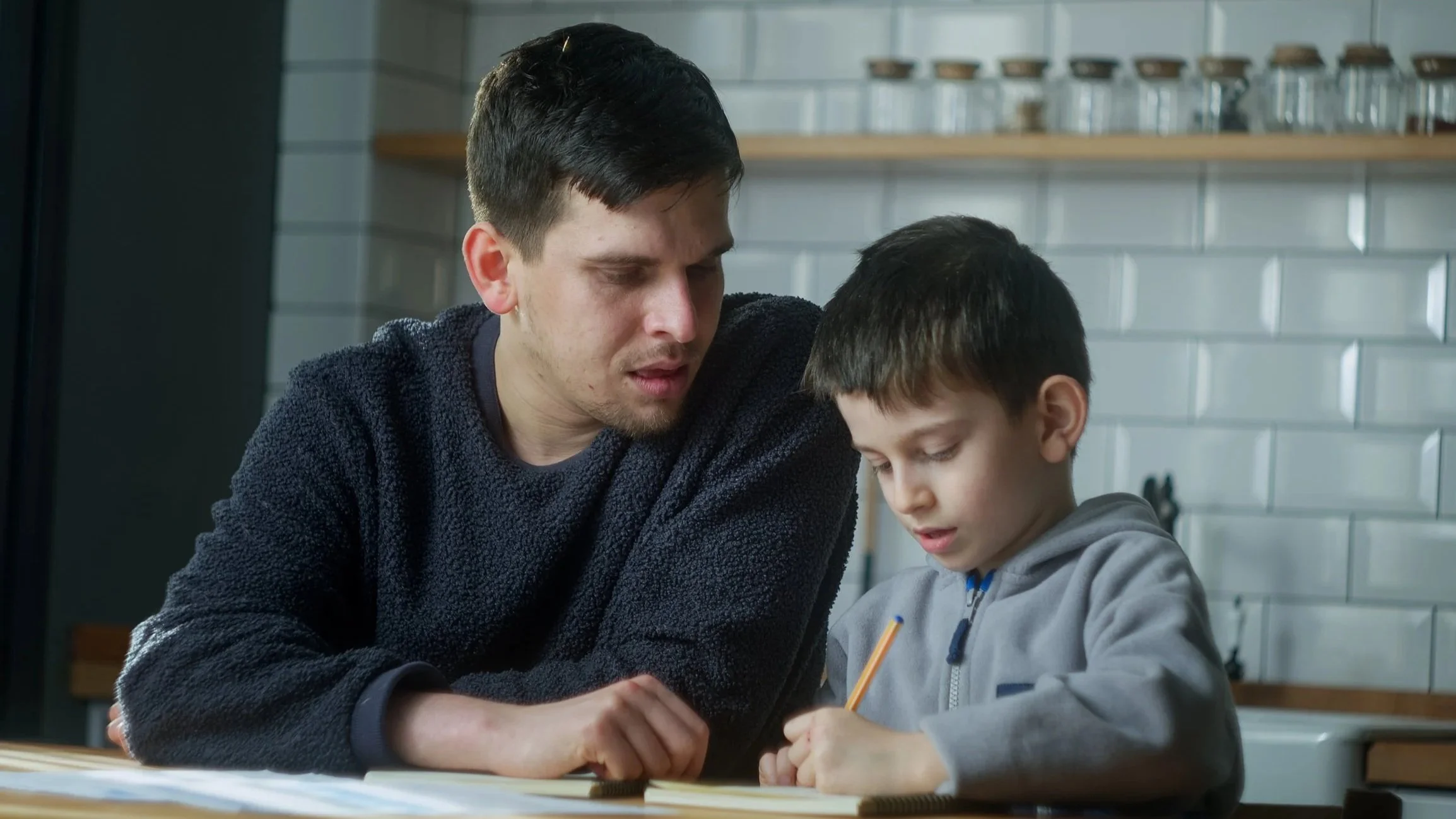
You know the moment. The homework that isn't happening. The tone at the dinner table. The thing you said before you decided to say it.
I want to tell you what twenty-two years in a classroom taught me about that moment. Not because I handled it well — for years I didn't. But what I eventually learned about that moment is one of the most useful things I carried out of a classroom.
As a young teacher, an off-task kid could get an outsized reaction out of me. The name, called across the room. The lesson stopped so that everyone could watch the correction land. I would have told you I was protecting the lesson. Some of it, honestly, was insecurity — a kid goofing off reads like a test of whether you're actually in charge, and I answered that test loudly.
Here's what actually happened, over and over. My overreaction produced an overreaction in the kid. Called out in front of thirty peers, a kid has face to save, and saving face looks like talking back, or slumping into theatrical sulking, or doubling down on exactly the behavior I'd named. The correction created the disruption it was meant to prevent. And look at the accounting: I had stopped my own lesson — surrendered the room's attention, broken the thread everyone else was following — to hand the stage to the one kid who wasn't doing the work. The distraction didn't take the room from me. I gave it away.
It took years to learn what the moment actually needed, and the answer turned out to be: less. Much less, delivered much closer.
First, just walk nearby. Keep teaching — keep the sentence going, the discussion moving — and drift toward the desk. Most of the time, that's the entire intervention. Proximity does the work, and the kid comes back to the task without one word of correction ever being spoken. If nearby isn't enough, a hand, briefly, on the ⟨shoulder / corner of the desk⟩. If that isn't enough, a whisper — close, quiet, belonging to the two of us and to nobody else in the room.
Notice something about that ladder. The first rung contains no correction at all. It's presence — connection in its plainest physical form. The correction, if it ever arrives, arrives last and smallest.
Notice what it protects. The kid's dignity, first: nothing happened in front of anyone, so there's no face to save, no audience to perform for, no counter-escalation to mount. But notice whose agenda survives: mine. The lesson never stops. The room keeps its ⟨scholarly / working⟩ feel. Twenty-nine kids stay with the work instead of turning to watch the drama, because there is no drama to watch. The loud version felt like taking control and actually surrendered the room. The quiet version looks like almost nothing and keeps everything — the momentum, the attention, the agenda — exactly where I wanted it.
There's a name for the shape of this: connection before correction. Come close before you come down. And I want to be precise about what it is, because it gets mistaken for softness. It isn't softness. It's the minimum effective dose — the smallest intervention that returns things to right, delivered at the closest range. The connection isn't a substitute for the correction. It's what makes most corrections unnecessary, and lets the necessary ones land small.
Now, the home.
Home is a classroom nobody planned. There's no lesson book for Tuesday night, but teaching is happening at that kitchen table all the same — in what gets corrected and how, in what the correction costs, in what a kid learns to expect when they've drifted off task in front of the person in charge. The relationship is the curriculum. It runs every day, designed or not.
And the correction reflex runs stronger at home than it ever did in my classroom, because the stakes feel higher and everyone is more tired. The name called up the stairs is the home version of the name called across the room — and it hands over the room the same way. The evening's thread breaks. Face has to be saved. The small thing becomes the big thing, and the big thing is now the whole night.
So, the home. I won't pretend the ladder maps rung for rung — a parent pulling up a chair next to the homework doesn't always read as presence; sometimes it reads as inspection. But the shape of the thing carries. Make the first move a connecting move, and make it smaller than the one you feel like making. Sometimes that is simple presence — in the room, on your own business, no agenda. Sometimes it's a genuinely curious question, asked like you want the answer, about anything but the problem. Sometimes it's just the pause — long enough to choose your opening instead of firing it. Contact first. The verdict later, smaller, and close — not across the living room, not up the stairs. And often, once contact is made, the verdict turns out not to be needed at all.
You'll likely feel the reflex tonight. It fires fast, before choosing gets a chance — that's what a reflex is. Walking nearby is a choice. It's slower by three seconds and better by the whole evening. And unlike my classroom, where a kid was mine for a year, the kitchen-table classroom runs for a childhood. What gets taught there, over all those Tuesdays, is what the relationship itself has been teaching all along.